

Have you always dreamed of moving to Spain from Hampshire?
Are you swapping Hampshire’s fields and familiar coastal air for Spanish sunshine, slower mornings, and a glass of something cold by early evening?
It is a brilliant move, genuinely, and thousands of British people make it every year. But between the dream and the reality sits a to-do list that deserves some proper attention.
From visas and customs paperwork to what your removal costs might actually look like, this guide walks you through the most important parts of organising a move to Spain from Hampshire in 2026, without the jargon or the unnecessary drama.
Think of it as a chat with someone who has helped a few people do exactly this and wants to make sure you go in with your eyes open and your boxes properly labelled.
Moving to Spain from Hampshire: Quick Overview for 2026
Planning a move from Hampshire to Spain in 2026 comes with exciting opportunities, but also a fair bit to organise. Here’s a quick, no-nonsense snapshot of what matters most before you pack a single box.
- Why Spain Appeals to Hampshire Movers
Warmer weather, lower living costs, and a slower pace of life continue to draw UK residents to Spain in large numbers. - Visas & Residency Requirements
post-Brexit rules mean you’ll need the right visa (often the Non-Lucrative Visa) and must register locally once you arrive. - Timing Your Move Properly
Spring and autumn are ideal; avoid August delays and secure your Spanish address early to streamline paperwork. - Removal Costs & Service Options
Expect £2,500–£7,500 depending on volume and service level, with part-load and full-service options available. - Customs & Brexit Paperwork
Your move now crosses an EU border; accurate inventories and Transfer of Residence relief are essential to avoid delays or charges. - Healthcare & Insurance
Private health insurance is required initially, with access to Spain’s public system possible later, depending on your status. - Finances & Tax Planning
Set up a Spanish bank account early and understand your tax position before becoming a Spanish resident. - What to Take (and What to Leave)
Decluttering pays off, many UK items don’t suit Spain’s climate or lifestyle, so ship selectively. - Pets, Vehicles & Practical Details
Pets can travel with the right documents, but cars and plants require more thought due to regulations. - Schools & Family Considerations
Spain offers solid state education and a wide choice of international schools, but planning ahead is key. - Settling In After Arrival
Register locally, organise utilities, and start integrating. Learning some Spanish will make a real difference.
In short: a successful move to Spain from Hampshire comes down to preparation, timing, and getting the details right early. Get those nailed, and you can focus on enjoying the lifestyle you moved for in the first place.
Why Hampshire Residents Are Heading to Spain in 2026

It is not hard to see the appeal. Hampshire is a beautiful county, no question, but the combination of rising living costs, wet grey winters, and a great yearning for a change of pace is nudging increasing numbers of people southward across Europe.
Spain continues to top the charts as the most popular destination for British expats, and for good reason.
The climate alone is transformative. The Costa del Sol, Costa Blanca, and the Balearic Islands offer something England simply cannot compete with – reliable warmth for most of the year.
Add to that a grocery bill that is typically around 20% lighter than at home, dining out that costs a fraction of what you would pay in Portsmouth or Winchester, and property prices that can be 40% lower per square metre than comparable UK locations.
You can find a detailed breakdown of how costs stack up at Moving to Spain: Cost of Living Spain vs UK.
For Hampshire families used to the pressure of commuting and housing market stress, Spain represents something genuinely refreshing: a country where life still moves at a human pace.
Visas, Residency, and the Post-Brexit Reality for UK Movers
This is where many people get a little caught up, so it is worth being clear.
Since Brexit, British citizens are no longer EU nationals, which means you cannot simply turn up and set up home in Spain the way you once could. The 90-in-180-days rule now applies to visitors, so if you plan to stay permanently, you need the right visa before you go.
The most common route for retirees and people with passive income is the Non-Lucrative Visa (NLV). It allows you to live in Spain without working locally, provided you can demonstrate sufficient funds: around €28,800 per year for a single applicant in 2026, rising to approximately €36,000 for a couple.
You apply through the Spanish Consulate in London before you travel. A thorough and regularly updated guide to the NLV can be found at Spain Non-Lucrative Visa 2026.
Once you arrive, registering on the local municipal register (the Padron) and applying for your TIE (Tarjeta de Identidad de Extranjero) residency card at the nearest police station are your next steps. The UK government’s own guidance on this process is clear and worth bookmarking: Spain: Registering as a Resident and Getting a TIE (GOV.UK).
Getting the Timing Right: When to Commit to Your Move

One thing most experienced international removal companies will always tell you, Spain has a rhythm and working with it rather than against it makes a significant difference.
Late spring and early autumn are generally the sweet spots for moving. August in particular can be chaotic across much of Spain, with businesses closed, bureaucratic offices running on skeleton staff, and roads busier than usual.
From a practical standpoint, it also pays to sort out your Spanish accommodation before your removal vehicle leaves Hampshire.
Whether you are renting initially or have already purchased, having a confirmed address considerably speeds up the Padrón registration and your TIE application.
If your property purchase is still completing, consider a phased approach: move your essential items first and use storage for the rest.
Curtiss Moving & Storage offer flexible storage solutions that fit perfectly for this kind of situation, so there is no pressure to have everything arrive on the same day your new life begins.
What the Move Itself Will Cost You: A Realistic Breakdown

Cost is usually the first thing people want to pin down, and understandably so. The honest answer is that it varies quite a bit depending on the volume of your belongings, the specific destination within Spain, and the level of service you choose.
A full-house move from Hampshire to Spain typically ranges from £2,500 to £7,500, based on current market rates.
You will generally find two main service levels available.
- A full packing and moving service covers everything from wrapping your crockery to delivering it and unloading into the appropriate rooms in your Spanish home.
- A part-load option, where your belongings share a vehicle with other customers heading in the same direction, is a more budget-conscious alternative with slightly less predictable delivery windows.
Do not overlook the ancillary costs either: specialist packing materials, transit insurance, customs documentation fees, and any temporary storage in the UK or Spain all add up.
Our packing solutions page gives you a clearer picture of what professional packing involves and why it is worth considering for a long-haul European move.
Customs and Paperwork: What Post-Brexit Actually Means for Your Belongings

Here is something a lot of people do not realise until it is almost too late: moving your household goods from the UK to Spain now involves customs formalities that did not exist before Brexit.
Spain is an EU member state, and the UK is not, which means your removal crosses an international customs border.
The good news is that most people moving permanently can claim Transfer of Residence Relief, often referred to as ToR, which exempts household belongings from import duty and VAT, provided those items have been in your possession for at least six months, and you are establishing genuine residency in Spain.
You will need proof of your new Spanish residency (your TIE card, Padrón certificate, or a recent Spanish bank statement) to support the claim.
A detailed inventory of everything in the removal vehicle, valued at its current second-hand worth, is also essential. This needs to be available in both English and Spanish. Spanish customs authorities take a thorough approach to documentation, and a missing or incorrect form can significantly delay delivery.
A useful overview of the customs process is available in the Customs and VAT Rules for Importing Personal Effects to Spain.
If you are concerned about what you can and cannot import, FIDI provides a downloadable PDF with detailed guidance on importing goods into Spain.
Healthcare in Spain: What British Movers Need to Know

Spain’s public healthcare system is right up there among Europe’s best, and for residents who contribute to Spanish social security, it is largely free at the point of use.
For most British people moving under a Non-Lucrative Visa, the immediate requirement is private health insurance, which must be in place from day one and must cover the full scope of medical care without co-payments or deductibles.
Premiums for private health insurance in Spain typically range from €50 to €150 per person per month, depending on age and the level of cover selected.
However, after twelve months of residency, NLV holders may become eligible for the Convenio Especial, a paid-access route into the public healthcare system, which can be more cost-effective for older applicants.
If you are eligible for a UK State Pension, an S1 form from the NHS entitles you to access the Spanish public health system directly, without needing separate private insurance.
The UK government’s living in Spain guide covers this in detail: Living in Spain: GOV.UK.
Sorting Your Finances: What to Tackle Before You Leave Hampshire

The financial side of an international relocation has more moving parts than most people initially expect, and the earlier you start untangling them, the smoother the transition will be.
Opening a Spanish bank account before you arrive is increasingly straightforward, and it makes paying deposits, utility bills, and local taxes considerably easier once you are on the ground.
Research current account options for non-residents on Bankinter’s international page.
Tax residency is something to take seriously well in advance, too.
If you spend more than 183 days per year in Spain, you become a Spanish tax resident, which means you are liable to declare your worldwide income to the Spanish tax authorities.
Spain and the UK have a double taxation agreement in place, so you should not be taxed twice on the same income, but navigating this correctly really does require advice from a qualified international tax specialist.
It is also worth notifying HMRC of your departure, updating your pension arrangements if relevant, and reviewing any UK-based investments or ISAs, since these may be treated differently once you become a non-UK resident.
A thorough pre-move financial review can prevent some genuinely costly surprises further down the line.
What to Ship, What to Sell and What to Leave Behind

One of the most liberating aspects of relocating abroad is the permission it gives you to properly declutter, something so many of us mean to do but never get around to.
A surprising number of British people who move to Spain discover that they shipped considerably more than they needed, and that certain items either did not survive the journey well, were quickly replaced by locally sourced alternatives, or simply did not suit their new Spanish home.
As a practical starting point, consider the climate.
Heavy winter duvets, woolly rugs, and thick curtains work beautifully in Hampshire. In Malaga or Alicante, they will spend most of the year in storage.
Electrical items are worth checking too: Spain uses 220-240V power, which is the same as the UK, so most appliances will work fine, though you will need to check plug adaptors for some items.
Antiques, high-value artwork, and items with strong sentimental significance warrant proper specialist wrapping and transit insurance.
Our team can walk you through cover options – what we at Curtiss Moving & Storage refer to as MoveProtect available for international moves, because what it costs to adequately cover your belongings properly is almost always much less than what it costs to replace them.
Pets, Plants, and the Practical Details People Often Forget

If your move to Spain includes a four-legged family member, the good news is that dogs and cats can travel to Spain from the UK without the nightmare paperwork that once applied.
They must have a microchip, an up-to-date rabies vaccination, and an official Animal Health Certificate issued by a government-authorised vet within ten days of travel.
The Blue Cross guide to post-Brexit pet travel is a reliable, regularly updated reference for current requirements.
Plants are considerably more complicated. Most live plants, soil, and certain seeds are prohibited or restricted at the EU border, and attempting to bring them through customs without the required phytosanitary certificates can result in confiscation.
The sensible approach is to leave beloved garden plants with trusted neighbours and invest in new ones once you are settled.
It is also worth thinking about your vehicle. UK-registered cars can be driven in Spain for up to six months after you become a Spanish resident, but after that, you are required to re-register the vehicle on Spanish plates, which involves inspection, fees, and some patience with the local transport office.
Some people find it simpler to sell their UK car before leaving and buy locally once they arrive.
Moving with Children: Schools and Education in Spain

For families relocating with children, getting the education question right sits near the top of every practical priority list.
The good news is that Spain’s state school system is genuinely well-regarded, free for all resident children regardless of nationality, and runs from age six through to sixteen.
For families committed to a long-term life in Spain, enrolling children in the local state system offers the fastest route to language fluency and genuine social integration, and children typically adapt to a new language environment faster than most parents dare hope.
The state system is decentralised, meaning each of Spain’s seventeen autonomous communities manages its own education provision.
In some regions, this means partial instruction in a regional language such as Catalan, Valencian, or Basque alongside Castilian Spanish, so the experience varies depending on where in Spain you settle.
Many state schools now run bilingual programmes with English, which can ease the transition for younger arrivals.
A practical overview of how the system works for expat families can be found at SpainEasy’s guide to the Spanish school system.
International schools offering British, American, or International Baccalaureate curricula are available across the most popular expat regions, from the Costa del Sol to the Costa Blanca and the major cities.
Fees vary widely, from around €4,000 to over €20,000 annually, and places at well-regarded schools in sought-after areas can be limited.
Early enquiry is strongly advisable, ideally six to twelve months before you plan to arrive, since school places in popular areas are allocated based on your registered local address.
For a comprehensive look at the options, Help at Hand Spain’s schools guide covers state, concertado, private, and international routes in detail.
Settling In: Life After the Removal Van Departs

There is a particular kind of magic to the moment when the last box is unpacked, and your new Spanish home starts to feel like yours. It tends to arrive sooner than most people expect.
Spain is a genuinely welcoming country, and expat communities across the Costa Blanca, Costa del Sol, and other popular areas are well-established and typically very willing to share local knowledge with newcomers.
The practical steps upon arrival include registering at the local Ayuntamiento (town hall) to obtain your Padron certificate, applying for your TIE card at the nearest National Police station, and opening or activating your Spanish bank account.
Enrolling any children in school, registering with a local GP equivalent, and sorting your utilities are the next priorities.
Learning a little Spanish goes a remarkably long way. Even a handful of phrases and a willingness to try open doors that stay firmly shut for those who expect English to be universally spoken.
It makes the local menú del día considerably more entertaining too!
Planning a Move to Spain from Hampshire? Talk to Curtiss Moving and Storage
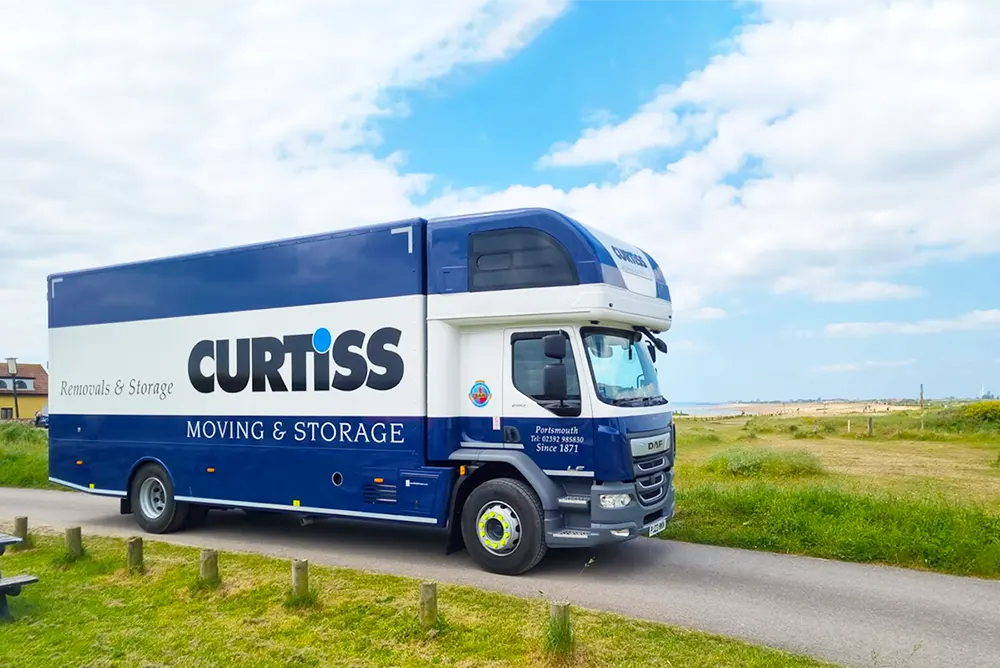
At Curtiss Moving and Storage, we have been helping Hampshire families and individuals relocate both locally and across Europe for generations.
As proud members of the British Association of Removers (BAR), we are held to the highest standards of professional practice, which means your belongings are always in safe, accountable hands.
Our dedicated removals to Spain service covers everything from pre-move surveys and professional packing through to customs documentation support and delivery to your Spanish door.
We also offer secure storage solutions if your timing needs a little flexibility. We know every move is different, so we take the time to understand yours properly before anything is wrapped or loaded.
Get in touch with us today to arrange a free survey and quote.
Frequently Asked Questions: Moving to Spain from Hampshire
Q: Do I need to learn Spanish before moving to Spain?
A: You do not need to be fluent, but a working knowledge of basic Spanish will make a significant difference to your day-to-day life, particularly when dealing with local authorities, tradespeople, and medical appointments. Many popular expat areas have strong English-speaking communities, but the towns and regions that feel most authentically Spanish will require at least a conversational level. Free resources such as Duolingo and local evening classes in Hampshire before you go are both worth considering.
Q: What happens to my UK State Pension when I move to Spain?
A: Your UK State Pension continues to be paid after you move to Spain, and it is also uprated annually in line with UK increases, which is a benefit not extended to British pensioners in all countries. You will need to notify the International Pension Centre of your change of address, and pension payments can be made directly into a Spanish bank account. As Spain and the UK have a double taxation agreement, your pension should not be taxed twice, but it is always advisable to seek independent financial advice before you relocate.
Q: Will I need to pay stamp duty or other taxes when buying a property in Spain?
A: Yes. Purchasing property in Spain comes with its own tax obligations, which differ depending on whether you are buying a new build or a resale property. For resale homes, buyers typically pay Impuesto de Transmisiones Patrimoniales (ITP), which varies by region but generally ranges from 6% to 10% of the purchase price. New builds are subject to VAT (IVA) at 10%, plus a legal documentation tax. On top of this, notary fees, land registry fees, and legal fees add a further 1% to 2%. Budgeting for an additional 10% to 15% on top of the purchase price is the standard guidance.
Q: How long does a removal from Hampshire to Spain typically take?
A: Transit times vary depending on the destination region within Spain and the type of service selected. A direct, full-load service from Hampshire to the Costa del Sol or Costa Blanca typically takes between four and seven days. Part-load or groupage services, where your belongings share a vehicle with other customers, can take longer, sometimes up to two to three weeks, as the vehicle consolidates loads across different UK locations before departing. Your removal company should be able to give you a more specific estimate once the volume and destination are confirmed.
Q: Is there anything I absolutely cannot bring to Spain?
A: Certain categories of goods are either prohibited or tightly restricted at the Spanish border. These include drugs and controlled substances, counterfeit goods, offensive materials, firearms and ammunition (without specific permits), certain prescription medications (particularly in quantities above personal use), most live plants and soil, and large quantities of alcohol or tobacco above the personal use thresholds. New or commercially purchased items less than six months old may attract import duties even for personal shipments, so declaring them accurately on your customs inventory is essential. Your removal company can flag any items of concern during the survey stage.


