
Planning removals in Chichester and wondering how the city’s narrow streets and controlled parking zones will affect your moving day?
You are asking exactly the right question.
Chichester’s compact centre, its ring of Roman walls and its mix of period cottages and modern estates all bring their own quirks when it comes to getting a removal van close to your front door.
It’s surprising how a little local knowledge goes a long way toward a calm, well-timed move.
Read on to discover more about removals in Chichester.
A Short Overview of This Article
This guide walks you through what to expect when moving in and around Chichester in 2026, with a particular focus on parking and access. Here is what is covered.
- Why Chichester’s layout, from the historic Pallants to the busy Cross, creates different parking and access challenges depending on where you live.
- How Chichester District Council’s bay suspension and dispensation systems work, including timeframes, costs, and the MiPermit process.
- What a typical moving day actually looks like, from the morning load to settling into your new home, plus how to plan around seasonal traffic such as Goodwood events.
- Practical tips for flats, terraces and rural village addresses around Chichester, where access challenges differ quite a bit from the city centre.
- When the business of moving home is done, find out what you can do in and around Chichester.
By the end, you should have a clear, practical picture of how to plan your moving day around Chichester’s parking rules and traffic patterns, with sensible timeframes for booking everything in advance.
Why Parking and Access Matter So Much in Chichester
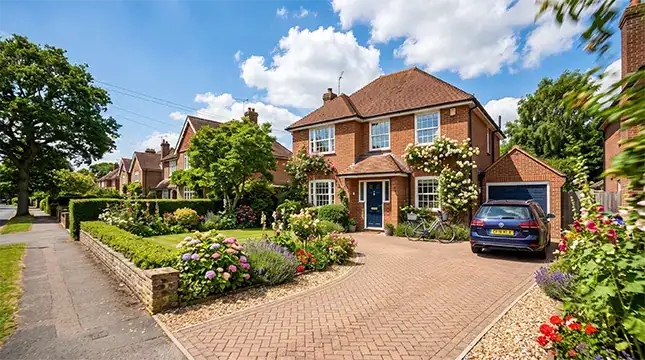
Chichester is a small city with a big personality, and that personality is partly shaped by its history.
The Roman walls still mark out the old centre, and the four main streets radiating from the Cross, North, South, East and West Street, are lined with listed buildings, narrow pavements and a patchwork of parking restrictions that change from one road to the next.
For removals, this matters more than people often expect. A six-metre van that glides easily down a wide suburban avenue in Summersdale or Donnington can struggle to find anywhere legal to stop on a terraced street near the Cathedral or in one of the Pallants.
Add a Saturday market, a school run, or a Goodwood event weekend on top, and what should be a straightforward loading job can turn into a logistical puzzle if nobody has planned ahead.
The good news is that most of these issues are entirely avoidable with early planning and a bit of local knowledge.
Knowing whether your road falls within one of Chichester’s Controlled Parking Zones, understanding how long a bay suspension takes to arrange, and choosing a removal company that already knows the city well will solve the vast majority of access headaches before they arise.
Understanding Chichester’s Controlled Parking Zones
Chichester District Council manages on-street parking on behalf of West Sussex County Council, and the city centre is divided into thirteen Controlled Parking Zones, identified by the letters A, E, F, G, H, H2, J, K, L, M, N, O and S.
If your home sits within one of these zones, the road outside is likely to have resident permit bays, pay-and-display bays, or both, and a removal van staying for an hour or two will usually need some form of authorisation.
There are two main routes, depending on how long you need the space for. A bay suspension reserves a stretch of road for your removal vehicle and needs at least six working days’ notice, with costs checked via the council’s online calculator.
Note it covers the removal vehicle rather than your own car, so you may need a separate visitor permit.
A dispensation notice, applied for through MiPermit with at least 24 hours’ notice, suits less predictable loading times.
Helpfully, short periods of loading and unloading from permit holder or pay-and-display bays do not always require a permit, though most companies recommend a suspension once a job runs into hours rather than minutes.
Outside the main zones, in places like Fishbourne, Hunston or the Witterings, on-street parking is far less restricted.
What Happens on Moving Day in Chichester

Knowing the theory behind parking permissions is useful, but most people really want to know what the day itself will actually look like.
Moves close to the centre usually start early, since arriving before the school run and morning shop deliveries begin makes loading considerably smoother.
Your removal team will talk you through the day’s plan, confirm any parking arrangements already in place, and conduct a final walk-through of the property before loading begins.
Loading is the longest part of the day, and this is exactly where good access planning pays off.
With a suspension or dispensation arranged in advance, the van can remain close to the property throughout the loading window without anyone watching the clock on a pay-and-display meter.
Once loading is complete, road timings are worth considering too.
Traffic on the A27 around Chichester can build up at peak times, and anyone moving during Goodwood’s Festival of Speed or Revival weekends should expect noticeably busier roads in and around the city.
At the new property, the same access questions apply in reverse.
Practical Tips for Different Chichester Property Types
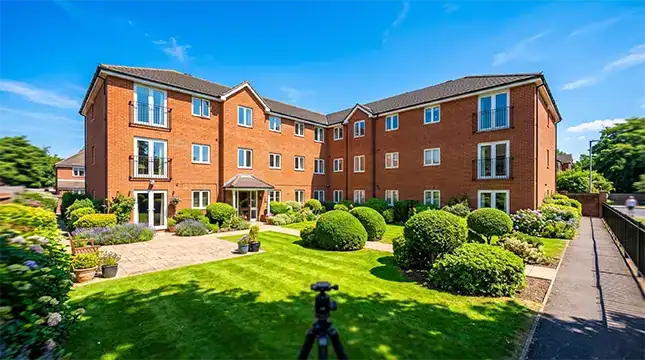
Access challenges vary depending on where in the district you are moving.
- Flats above shops along North Street or East Street often involve stairs, narrow doorways, and shared entrances, so confirming lift access and door widths in advance saves real time on the day.
- Period terraces in the Pallants or around St Pancras tend to have the tightest road access and the highest likelihood of needing a formal bay suspension, given the narrow streets and high demand for resident parking.
- Modern estates in Tangmere, Westhampnett or Bourne Close generally offer driveway or close parking, meaning council permissions are rarely needed.
- Rural and village addresses around Fishbourne, Funtington, or the Witterings usually have generous on-street space but can instead bring narrow lanes or tight gateways into play.
A proper pre-move survey, whether in person or via video call, is the simplest way to flag any of these issues early, so your removal company can plan the right-sized vehicle and crew for your specific address.
Choosing a Removals Company That Knows Chichester
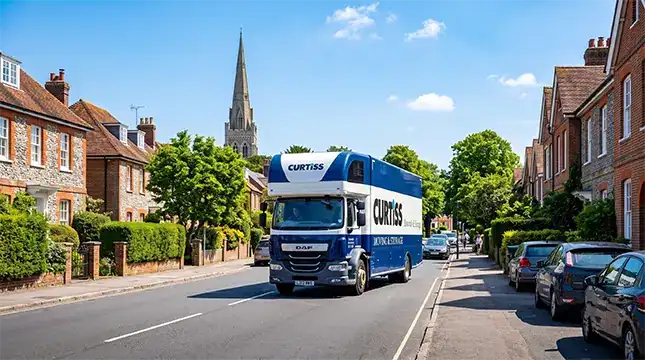
Not every removal company has detailed local knowledge of Chichester’s parking zones and seasonal traffic patterns, and this is genuinely worth asking about when comparing quotes.
A company that has moved families in and out of the city and the surrounding villages for years will already know which streets typically need a suspension and which do not, saving you time and guesswork.
Curtiss Moving & Storage has been carrying out removals across Chichester and the wider South Coast since 1871, and as members of the British Association of Removers, our teams are trained to the standards required by BAR membership.
We offer free home-visit surveys and online video surveys, professional packing services, and secure containerised storage for anyone whose completion dates do not quite align.
You can find out more on our dedicated Chichester removals page, or call our team on 023 9298 5830 to talk through your specific street and access requirements.
Settling In After Your Move

Once the van has gone, a short list of admin jobs makes the transition into Chichester life much smoother.
Letting Chichester District Council know of your new address for council tax purposes should be done within 21 days to avoid unnecessary fines.
Registering with a local GP practice early is always worth doing through the NHS Find a GP service rather than waiting until you need an appointment.
If you are moving with children, the West Sussex County Council admissions pages are the best starting point for catchment information.
Things to Do in Chichester in Your Downtime
When you have some free time, Chichester offers plenty of ways to relax, explore, and enjoy the local area.
History lovers can spend an afternoon admiring the stunning architecture of Chichester Cathedral, one of Sussex’s most iconic landmarks.
If you enjoy the arts, the city’s renowned Festival Theatre hosts a packed programme of drama, comedy, music, and family shows throughout the year.
For those who prefer the outdoors, a stroll through the beautiful Bishop’s Palace Gardens provides a peaceful escape right in the city centre.
Just outside Chichester, Goodwood is famous for its motorsport events, horse racing, and championship golf, while the nearby Weald & Downland Living Museum offers a fascinating glimpse into rural life through the centuries.
Whether you enjoy culture, history, or the great outdoors, Chichester has something to suit every interest.
Frequently Asked Questions about Removals in Chichester
Do I need permission to park a removal van in Chichester city centre?
It depends on the road. Many streets within Chichester’s thirteen Controlled Parking Zones require either a bay suspension or a dispensation notice for a removal vehicle to load and unload over an extended period, while loading itself for shorter periods is often permitted without one. Your removal company should be able to advise on this once they know your address.
How far in advance should I arrange a parking suspension?
Chichester District Council asks for a minimum of six working days’ notice for a standard bay suspension, and dispensation notices generally require at least 24 hours’ notice. Booking earlier than the minimum is always sensible, particularly during busy periods such as the summer months or Goodwood event weekends.
Will Goodwood events affect my moving day?
They can. The Festival of Speed and Goodwood Revival both bring a significant increase in traffic to roads around Chichester, including the A27. If your moving date falls close to one of these events, it is worth discussing timings with your removal company in advance.
What if my new home does not have an existing parking arrangement?
Any suspension or dispensation that benefited the previous occupants does not automatically carry over. You will need to apply afresh in your own name if your new address falls within a Controlled Parking Zone, and your removal company can usually advise on the appropriate type of permission for the specific street.
Do village and rural addresses around Chichester have the same restrictions?
Generally, not. Villages such as Fishbourne, Funtington and the Witterings tend to have far less restrictive on-street parking than the city centre, though narrow lanes and private roads occasionally bring their own access considerations, which is exactly what a pre-move survey is designed to catch.
Ready to plan your move with a removal company that already knows Chichester’s streets, zones, and seasonal quirks? Contact Curtiss Moving & Storage today for a free, no-obligation quote.