
Are you searching for office removals in Hampshire?
Relocating a business is a huge undertaking.
Unlike a house move, you aren’t just moving furniture; you are moving your livelihood. The cost of downtime, lost productivity, and potential technical glitches means the stakes are high.
However, an office relocation doesn’t have to be chaotic.
Whether you are moving a startup within Portsmouth, expanding to larger premises in Southampton, or relocating a corporate HQ to Winchester, a structured plan is your best defence against disruption.
If you “wing it,” you risk stressed staff and unhappy clients. If you plan it, it can be the start of an exciting new chapter.
Here is our professional 5-step checklist to guide your office move from start to finish.
1. Set Clear Goals, Budget & Timeline

Before you book a crate or pack a file, you need a strategy.
- Define your objectives: Why are you moving? Are you expanding, downsizing, adopting hybrid work, or relocating to improve client access?
- Audit your furniture: Will your current desks and meeting tables fit the new layout? Measure the new space early. If you need new furniture, order it now—lead times can be weeks.
- Dispose of the old: Do not pay to move broken chairs or outdated filing cabinets. Dispose of them responsibly at your local Hampshire Recycling Centre.
- Select your move date: Avoid peak trading periods. Professional movers often recommend planning a commercial relocation at least 3 months in advance.
- Budget realistically: Factor in removals, crate hire, IT disconnection/reconnection, and potential storage costs.
2. Build Your “Move Team” & Inventory

Successful business moves are rarely solo missions. You need a dedicated internal team.
- Appoint a Project Lead: Designate a single point of contact for the removal company. This avoids mixed messages.
- Department Reps: Engage a representative from IT, HR, and Operations to flag specific departmental needs.
- Create an Inventory: List every item: desks, chairs, servers, filing cabinets, and signage.
- Identify Special Items: Mark high-value tech, heavy safes, or confidential files that require specialist handling.
Pro Tip: This is the perfect time to declutter. If you haven’t accessed a file in five years, does it need to move to the new office, or can it be placed in Archive Storage?
3. Plan Your IT & Data Migration

IT is the backbone of modern business. If the servers are down, the business is down. This is frequently the biggest bottleneck in an office move.
- Schedule IT Support: Coordinate with your internal IT team or external provider well in advance of the big day to manage server shutdowns.
- Back Up Everything: Ensure all systems and files are securely backed up off-site before any hardware is unplugged.
- Connectivity First: Ensure the new site has active internet, Wi-Fi, phone lines, and power before staff arrive on Monday morning.
4. Notify People, Partners & Public Profiles

Communication is critical. You need to ensure your clients can find you and your suppliers can bill you.
- The “Big Announcement”: Inform staff, clients, suppliers, banks, and insurers of your new address and move date.
- Official Records: Update your Companies House and HMRC records.
- Digital Footprint: Update your Google Business Profile, website footer, and social media channels.
- Email Signatures: Add a temporary note to all staff email signatures: “Please note, we are moving to [New Address] on [Date].”
GOV.UK’s guide to updating your business address is a useful resource here.
5. Work With Professional Commercial Movers

This is where Curtiss Moving & Storage steps in.
Office moves require specialist equipment, crate hire, and detailed scheduling to ensure minimal downtime. A “man and van” service is rarely sufficient for a business relocation.
A professional commercial removal partner will:
- Provide Crate Hire: We supply sturdy plastic crates for files and IT equipment (far superior to cardboard boxes for office moves).
- Protect the Building: We use lift protection and floor coverings to prevent damage to the building fabric at both ends.
- Manage the Heavy Lifting: From dismantling desks to moving heavy photocopiers and safes.
- Offer Archive Storage: If you are downsizing but legally need to keep tax records for seven years, our secure document storage is the perfect solution.
Bonus: The Post-Move “Settling In”
Once the vans have left, the work isn’t quite done.
- Test Systems: Ensure phones and networks are live immediately.
- Post Redirection: Sign up for the Royal Mail business redirection service to catch any stray invoices.
- Celebrate: Moving is hard work. Treat the team to lunch or an early finish on Friday to thank them for their patience!
Choose Curtiss for Office Removals in Hampshire?
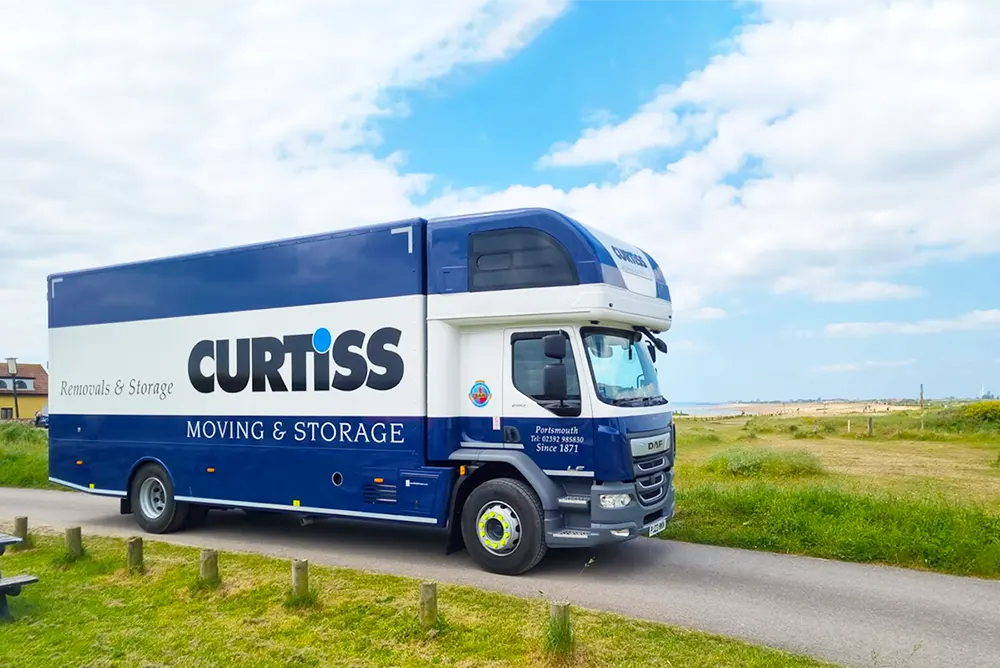
Commercial removals in Hampshire don’t have to be a logistical nightmare.
With the right planning and an experienced partner like Curtiss Moving & Storage, you can transition smoothly and stay focused on business continuity. We have been moving businesses in Portsmouth and beyond since 1871—we know how to get the job done.
Contact us today for a commercial removal survey.