
Planning on moving to Portugal from Portsmouth or the wider Hampshire area?
A particular kind of weather sends Hampshire homeowners reaching for property websites, usually around late October, when the light drops early and the drizzle sets in for the evening.
It involves cork oaks, whitewashed villages, a plate of fresh sardines by the water and a pace of life that feels a world away from the South Coast commute.
For a steadily growing number of people across Portsmouth, Fareham, Havant and the wider Hampshire area, that daydream is turning into an actual plan.
Moving to Portugal from the UK remains entirely possible in 2026, but the route has changed since Brexit, and the paperwork now takes rather more thought than booking a flight and packing a suitcase.
This guide walks through what UK expats need to know before relocating.
Here we cover the essentials, from visas and residency to the practicalities of removals to Portugal that Hampshire families rely on, drawing on the experience of Curtiss Moving & Storage, Portsmouth’s removals company since 1871, alongside the latest official guidance available at the time of writing.
Here we go.
A Short Overview of This Blog
Moving to Portugal from the UK in 2026 takes rather more planning than it once did. Here is a short summary of what this guide covers.
- Why Hampshire Residents Are Drawn to Portugal: Lifestyle, climate and cost of living behind the move.
- Visas and Residency After Brexit: What has changed and which visa route may suit you.
- Choosing Your New Portuguese Home: Popular regions and what to consider when house hunting.
- Healthcare, Tax and Everyday Life: Registering locally and accessing services.
- Planning Your Removal to Portugal: How an international move is organised.
- Moving With Pets: Current rules for taking a dog or cat to Portugal.
- Choosing the Right Removals Company: What to check before booking your move.
Read on for the full detail behind each point, with links to official sources throughout.
Why Hampshire Residents Are Drawn to Portugal

Portugal has been a favourite with British expats for decades, and that appeal has only grown since Brexit, not faded.
The country offers close to three hundred days of sunshine a year in the south, a noticeably gentler cost of living outside Lisbon and the Algarve’s premium spots, and a culture built around good food, strong coffee and unhurried evenings.
Southampton and Portsmouth sit within easy reach of direct flights to Faro, Lisbon and Porto, usually taking around two and a half hours, making it straightforward to visit a prospective property or pop back to see family.
Retirees are often drawn by the climate and the relatively low cost of everyday living, while a growing number of remote workers see Portugal’s D8 digital nomad visa as a way of keeping a UK income while enjoying an Atlantic coastline.
Whatever brings you to Portugal, the planning required to make the move work smoothly is much the same regardless of your motivation.
If Portugal is not quite the right fit, our guide to moving to Italy from Portsmouth and Hampshire covers a similar process for a different corner of Europe.
Visas and Residency After Brexit: What Has Changed

Before Brexit, UK citizens could live and work anywhere in the EU without a visa. That right ended on 1 January 2021, and Britons are now treated as third-country nationals under Portuguese immigration law, the same as visitors from outside the EU.
UK nationals can still visit Portugal visa-free for tourism or business for up to 90 days within any rolling 180-day period, under the wider Schengen rules.
Anyone planning to live in Portugal long term needs the correct residence visa before travelling, followed by an appointment with AIMA, the Agency for Integration, Migration and Asylum, which replaced the old SEF border agency in 2023.
The route that fits you depends largely on your circumstances:
- D7 Visa: Often called the passive income or retirement visa, suited to retirees and others who can support themselves from pensions, savings or rental income rather than local employment. The minimum passive income threshold for 2026 sits at around 920 euros a month for a single applicant.
- D8 Visa: Designed for remote workers and freelancers who earn their income from outside Portugal, sometimes called the digital nomad visa.
- Work Visa: For those with a confirmed Portuguese job offer or plans to run a business in the country.
- Family Reunification Visa: For joining a family member who already holds Portuguese residency or citizenship.
Processing can take several months, so booking your appointment and gathering documents as early as possible is well worth doing.
Under a nationality law that took effect in May 2026, the residence period required before applying for Portuguese citizenship doubled from five years to ten for most nationals, including UK citizens, so this is not a decision to rush.
Because the right route depends heavily on personal circumstances, the GOV.UK living in Portugal guide is the best starting point, and many people also take advice from an immigration specialist or the Portuguese Embassy in London before applying, alongside the Portuguese government’s guidance on types of long stay visa.
Choosing Your New Portuguese Home

Choosing where to live is one of the most important decisions in any move to Portugal, and the country offers considerably more variety than its size might suggest.
Climate, cost of living, proximity to an airport, access to healthcare, and how connected you want to feel to other British expats can all shape your day-to-day experience just as much as the scenery.
Here are some of the most popular regions among UK expats.
- The Algarve remains the classic choice, particularly around Lagos, Tavira and Loulé, offering an established English-speaking community, excellent golf and beaches, though property prices here, and the cost of living generally, run higher than most of the rest of the country.
- The Silver Coast, north of Lisbon around Óbidos, Nazaré and Peniche, has become increasingly popular for its lower prices, dramatic coastline and easy access to Lisbon airport, while still offering a slower pace than the capital.
- Lisbon and Porto suit those who want city life, strong transport links and a wide choice of international schools, though both cities have seen sharp property price rises in recent years, and central neighbourhoods now sit well above the national average.
- For those prioritising value, the Alentejo and parts of the interior offer some of the lowest property prices in Western Europe, along with rolling countryside and a genuinely rural pace of life, though English-speaking services and healthcare access can be more limited away from the larger towns.
Whichever area appeals, visit more than once and in different seasons before committing, since a village that feels idyllic in June can feel very different in January.
Portals such as Idealista help you get a feel for prices across different regions.
Healthcare, Tax and Everyday Life

Once your visa and residence permit are sorted, register your residency with your local câmara municipal, and register with the Portuguese national health service, the Serviço Nacional de Saúde, known as the SNS.
You will need your residence certificate, passport and fiscal number, known as the NIF, to register for a healthcare user number at your local health centre, the centro de saúde. Once registered, you have the same rights to treatment as a Portuguese citizen, though many expats also take out private cover for shorter waiting times.
You can find out exactly how Portugal’s health system works by visiting the Portugalist.com website.
Tax residency is the area most worth taking seriously. Spend more than 183 days a year in Portugal, and you are likely to be considered tax resident there, with implications for how pensions, savings and any UK rental income are taxed.
Portugal’s old Non-Habitual Resident scheme, which offered generous tax breaks to almost any new resident, closed to new applicants at the start of 2025. It has been replaced by a far narrower incentive, known as IFICI, aimed specifically at highly qualified professionals working in fields such as science, technology and research, rather than retirees living on a pension.
The UK and Portugal have a double taxation agreement to prevent the same income from being taxed twice, but those who have done it consistently advise speaking to an accountant who understands both systems before you relocate.
It is also worth checking your UK State Pension entitlement if you live abroad and notifying HMRC of your change in residency as part of your departure from the UK.
Planning Your Removal to Portugal
Once the legal groundwork is in place, the physical move requires just as much planning, particularly for a full household relocation rather than a few suitcases.
An international move begins with a proper survey of your Hampshire property, in person or by video call, so we can prepare an accurate written quotation.
From there, your move is usually organised as either a dedicated, exclusive-use vehicle for a faster delivery, or a part load service, where your belongings travel alongside another customer’s consignment, which tends to suit smaller moves and tighter budgets.
Your removal company handles export paperwork as part of the service, and a good provider will also advise on Portugal-specific practicalities, such as delivery access in older town centres, where narrow, cobbled streets are common, particularly in the historic parts of Lisbon and Porto.
If your sale completes before your new Portuguese home is ready, secure storage can bridge the gap. Curtiss Moving & Storage offers containerised storage at our BS EN 14873 accredited Portsmouth warehouse, and our professional packing service is also worth considering, since longer journeys and continental road travel mean fragile items benefit from robust, professional packing.
Moving With Pets: What the Current Rules Require

For many Hampshire households, the family dog or cat is as much a part of the move as the furniture, and the rules have recently tightened.
Since 22 April 2026, EU pet passports issued to GB residents are no longer valid for travel from Great Britain into the EU, even if issued before that date.
Instead, anyone bringing a dog, cat or ferret to Portugal now needs an Animal Health Certificate, issued by a registered vet no more than ten days before travel, and valid for a single entry into the EU.
Before applying, your pet must be microchipped and have a current rabies vaccination given at least 21 days before travel, and dogs need tapeworm treatment within a set window before arrival.
Book your vet appointment as soon as your travel date is confirmed, since the ten-day certificate window leaves very little margin for delay.
The GOV.UK guidance on taking pets abroad has the current details.
Choosing the Right Removals Company for Removals to Portugal
An international move is not the time to risk an unfamiliar or unverified removal company.
Membership of the British Association of Removers is the clearest indicator of a trustworthy mover. BAR members are independently audited against rigorous standards and must offer access to an approved alternative dispute resolution scheme, giving you genuine recourse if anything goes wrong.
Curtiss Moving & Storage has held BAR membership for many years, alongside almost 155 years of trading history serving Portsmouth and Hampshire.
Ask any prospective mover about their specific experience with Portugal, rather than European removals in general, and confirm exactly what MoveProtect cover is included and excluded, since standard cover often excludes high value items such as antiques or specialist electronics.
Curtiss offers MoveProtect cover for overseas moves, giving genuine peace of mind that your belongings are protected throughout the journey.
Finally, ask for a written, itemised quotation based on a proper survey rather than a loose verbal estimate, with an honest estimate of transit time, which for Portugal typically runs from around four to six days for the Lisbon area, up to a week or so further south, depending on the service chosen and time of year.
Ready to Start Planning Your Move to Portugal?
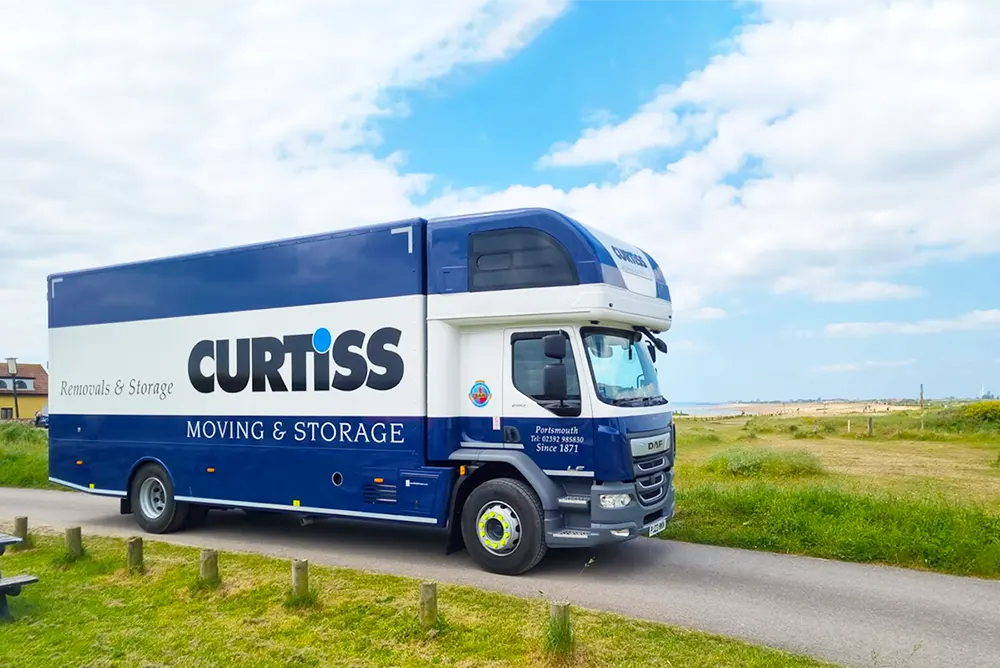
Moving to Portugal from Portsmouth or anywhere else in Hampshire is a significant undertaking, but with the right preparation, it is entirely achievable.
At Curtiss Moving & Storage, our team can walk you through exactly how we organise a Portugal move, from survey to delivery.
Visit our European Removals page to find out more, call us on 023 9298 5830, or email enquiries@curtissremovals.co.uk to request your free, no-obligation quote.
Frequently Asked Questions about Moving to Portugal from Portsmouth
Do I need a visa to move to Portugal from the UK in 2026?
Yes, if staying longer than 90 days. Short visits remain visa-free under the Schengen 90-in-180-day rule, but anyone moving long-term needs the correct residence visa, most commonly the D7 or D8, before travelling, followed by an appointment with AIMA after arrival.
How long does it take to become a Portuguese citizen as a UK national?
Under the nationality law that took effect in May 2026, most nationals from outside the EU, including UK citizens, now need ten years of legal residence before applying for citizenship, up from five previously. You can still generally apply for permanent residency after five years.
Can I bring my dog or cat with me when moving to Portugal?
Yes, but the documentation changed in April 2026. GB resident pet owners now need an Animal Health Certificate from a UK vet for each trip, rather than an EU pet passport, and your pet must be microchipped with an up-to-date rabies vaccination.
How much does it cost to move to Portugal with a removals company?
Costs vary depending on the volume of belongings, distance and whether you choose a dedicated vehicle or a part load service. The only way to get an accurate figure is through a proper survey, which Curtiss offers free of charge with no obligation.
Will I lose access to the NHS if I move to Portugal permanently?
Once officially resident in Portugal, day-to-day healthcare is generally accessed through the Portuguese SNS rather than the NHS, though exact arrangements depend on your visa category and employment status.
How far in advance should I book my removal to Portugal?
We recommend booking your survey as soon as your moving date is realistic, ideally six to eight weeks ahead, to allow time for export paperwork, vehicle scheduling and any storage arrangements.
Can Curtiss Moving & Storage help with storage if my move to Portugal is delayed?
Yes. Our secure, accredited storage facility in Portsmouth is ideal for bridging any gap between selling your UK property and being ready to receive your belongings in Portugal, whether that gap is a few weeks or considerably longer.